Vasculitis Program
Vasculitis Program
When it comes to rare diseases like vasculitis, where you seek care makes a difference. As a high volume center for the treatment of all types of rheumatologic conditions, U-M Health's multidisciplinary team of experts is experienced in diagnosing and treating even the most uncommon forms of vasculitis. Using the latest diagnostic and treatment tools, our team is committed to providing personalized care to address your needs.
Our Approach
Multidisciplinary care is coordinated by a rheumatologist (a joint and autoimmune diseases physician) specializing in vasculitis. Depending on the area of the body most impacted by the disease, the rheumatologist will collaborate with other specialists to arrive at a diagnosis and treatment plan, including:
- Neurologists (Brain and nervous system physicians)
- Ophthalmologists (Eye physicians)
- Otolaryngologists (Ear, nose and throat physicians)
- Cardiologists (Heart physicians)
- Nephrologists (Kidney physicians)
- Pulmonologists (Lung physicians)
- Dermatologists (Skin physicians)
- Vascular surgeons (Physicians who do surgery on blood vessels)
Our clinician scientists and investigators are also actively involved in research to better understand what causes vasculitis, and to develop treatments to better manage their symptoms and complications.
Appointment Information
To request an appointment or to get more information, please call 734-647-5900 or 888-229-3065.
Doctors

Julia Anne Ford, MD
Clinical Assistant Professor
Rheumatology, Internal Medicine

Ora Beth Gewurz-Singer, MD
Clinical Associate Professor
Rheumatology, Internal Medicine
News & Stories

Researchers identify a potential “Achilles heel” of psoriasis
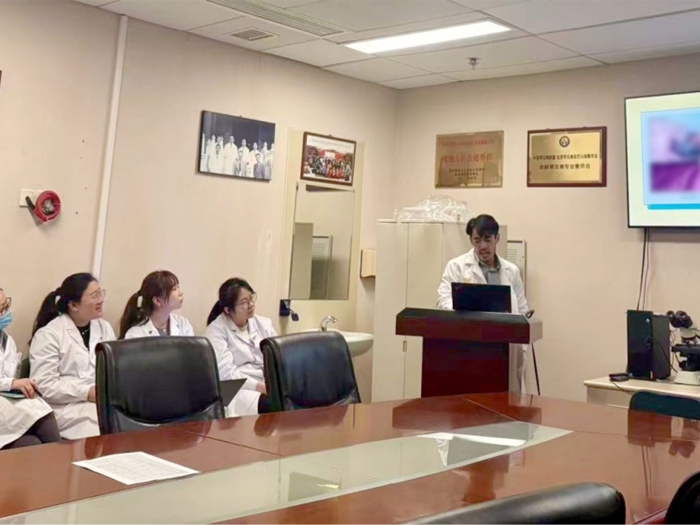
Dermatology resident’s China rotation highlights value of global training

New study hints at cause of pachyonychia congenita and a long-awaited potential treatment

New study hints at the cause of a painful skin condition—and at a long-awaited potential treatment

Single-cell RNA sequencing gives insight to dermatomyositis treatment