
Cognitive Disorders Program
Cognitive Disorders Program
The Cognitive Disorders Program at University of Michigan Health focuses on the diagnosis and treatment of people experiencing problems with memory and thinking ability, such as dementia, Alzheimer's disease and mild cognitive impairment.
Who We Treat
We see patients with a wide variety of cognitive disorders, including:
- Alzheimer's disease
- Familial dementia
- Frontotemporal dementia
- LATE-Type dementia
- Lewy Body Dementia and dementia associated with Parkinson’s disease
- Mild cognitive impairment
- Rapidly progressive dementia
- Rare dementia subtypes
- Vascular dementia
- Other disorders of cognitive impairment
Our Approach
In addition to affecting thinking abilities, dementia and related disorders often are associated with other symptoms. This means that multidisciplinary, collaborative care is essential not only for proper diagnosis, but also for developing a comprehensive treatment plan individually tailored for you. We partner with specialists from Neuropsychology, the Movement Disorders Program, Nuclear Medicine, Neuroradiology and the Sleep Disorders Center, plus Geriatrics and Geriatric Psychiatry.
We are housed in the Turner Geriatrics Center, which is the first facility in the U.S. specifically designed for geriatrics research and clinical programs. In fact, U.S. News and World Report ranked the Center as one of the top geriatric programs in the country.
Services
In order to diagnose your disorder and create your treatment plan, we often schedule you for three comprehensive appointments. At your first visit you will meet one or more of our neurologists, who will review your symptoms and medical history and will conduct a neurologic exam to assess your thinking, strength, coordination, reflexes and more. Diagnostic testing that best fits your particular situation may be ordered and may include:
- Brain imaging (such as magnetic resonance imaging or computerized tomography of the brain)
- Blood tests
- Electroencephalogram (to measure electrical activity in your brain)
- Lumbar puncture (spinal fluid evaluation).
If needed, we can also conduct Positron Emission Tomography (PET) scanning, a procedure that is not widely available and is helpful in distinguishing Alzheimer’s disease from other forms of dementia. The second visit consists of a thorough neuropsychological assessment that checks your memory, attention, mood, language, problem solving and visual/spatial abilities. At your third visit, we will review your tests and provide a diagnosis and treatment plan.
Treatment
Treatment recommendations depend on your diagnosis, but may include medications, physical therapy, occupational therapy and speech therapy. You may be eligible to participate in our clinical trials to receive the latest experimental therapies.
Degenerative brain diseases are chronic illnesses, and we have the resources to support you through the different stages of your disease. Our staff of dedicated social workers can assist you now and in the future by providing support, information, or referrals about important matters such as legal care, financial planning, residential living options, home health care services, transportation planning and driving assessment. Our social work division and our entire team are devoted to supporting you and your family through your illness.
Appointment Information
For more information about dementia, Alzheimer's disease or other cognitive disorders, or to make an appointment with the Cognitive Disorders Program, call 734-764-6831.
Research
Research is a critical focus of our group. For over two decades, the Michigan Alzheimer's Disease Center (MADC) has contributed to the expanding knowledge on Alzheimer’s disease and related dementias. Established in 1989, the Center is committed to enhancing participation in memory and aging research, furthering the understanding of diseases that result in cognitive impairment, promoting high quality clinical care, and providing current information on Alzheimer's disease and related disorders. We are excited to discuss with you the research studies and clinical trials being conducted through our center.
Locations
-
Geriatric Neurology Clinic | East Ann Arbor Health & Geriatrics Center 4260 Plymouth Rd
Level 1
Ann Arbor, MI 48109-2700Get Directions -
Neurosurgery Clinic | Taubman Center 1500 E Medical Center Dr
Floor 2 Reception G
Ann Arbor, MI 48109-5338Get Directions
Doctors

Sami J Barmada, MD, PhD
Associate Professor
Neurology
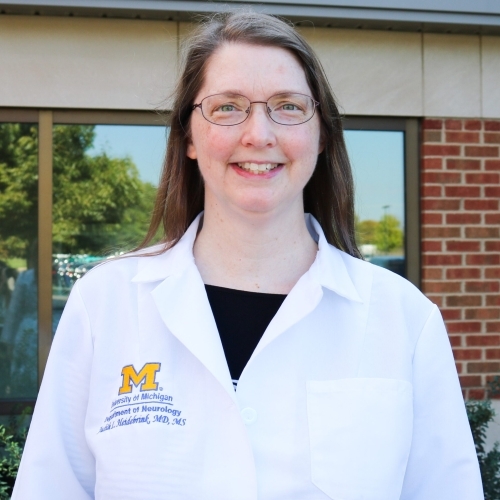
Judith Lynn Heidebrink, MD
Clinical Professor
Neurology

Steven Gregory MacDonald, MD
Clinical Assistant Professor
Neurology

Henry Lauris Paulson, MD
Professor
Neurology

Tanav Anand Popli, MD
Clinical Instructor
Neurology

Navid Seraji-Bozorgzad, MD
Clinical Associate Professor
Neurology, Internal Medicine
News & Stories

Could preeclampsia become a thing of the past?
Addressing Senior Social Isolation in the Community
The Impact of Social Isolation and Loneliness on Cognitive Health
Convoys of Caregiving: Arab American Families Living with Dementia
Neighborhood Income and Cognitive Health
