
Multiple Myeloma Program
Multiple Myeloma Program
Our Approach
Both plasmacytoma and multiple myeloma are treated by in the Multidisciplinary Multiple Myeloma and Plasma Cell Dyscrasias Clinic located within the Rogel Cancer Center building. The clinic provides the finest patient care through education, patient empowerment, clinical trial opportunities and participation with cancer specialists from other disciplines.
Our team of blood cancer experts has sub-specialty training so we can offer patients with multiple myeloma and other plasma disorders the highest standard of care and access to the latest therapies and drugs.
But multiple myeloma is unusual. The standard of care is changing rapidly because of abundant research projects and clinical trials that are extending life expectancy and quality of life. As a result, there are as many as 30 different options for treating the disease. To ensure the best treatment throughout Michigan, our specialists organized the Great Lakes Multiple Myeloma Working Group, an informal network with experts at other Michigan centers treating multiple myeloma. The shared goal is to find and bring the latest treatments and therapies to multiple myeloma patients not just at the University of Michigan, but throughout the state.
Who We Treat
Our experienced team of cancer doctors, nurses, pathologists and others treat adults diagnosed with plasma cell neoplasms:
Multiple Myeloma (most common)
Lymphoplasmacytic lymphoma
Plasmacytoma
Monoclonal gammopathy of undetermined significance (MGUS) is not cancer but can become cancer.
Services
Plasma cell neoplasms (Plasmacytoma)
This type of blood disease occurs when abnormal plasma cells or myeloma cells form tumors in the bones or soft tissues of the body. The plasma cells also make an antibody protein, called M protein, that is not needed by the body and does not help fight infection. These antibody proteins build up in the bone marrow and can cause the blood to thicken or can damage the kidneys.Multiple Myeloma
This is the most common, cancerous type of plasma cell neoplasm. Multiple Myeloma tumors keep the bone marrow from making enough healthy blood cells. As the number of myeloma cells increases, fewer red blood cells, white blood cells, and platelets are made. The myeloma cells also damage and weaken the bone.
Our team of pathologists has expertise in the diagnosis and classification of rare blood cancers, like multiple myeloma. Recognizing that treatment decisions are dependent upon an accurate diagnosis, we routinely ensure that your biopsy material is retrieved and reviewed by a pathologist with expertise in this area. Common ways multiple myeloma may be diagnosed are:
Lymph Node Biopsy
Part or all of a swollen lymph node will be removed and then analyzed to determine if it is cancerous.Bone Marrow Biopsy
A small sample of bone marrow will be taken and analyzed to see if cancer is present.Other Biopsy
Another tissue sample may be removed from the body if see if cancerous cells are present.
The following list provided contains a few of the possible treatment options. Treatment often depends on the stage of multiple myeloma, the patient’s age, and any other health problems the patient may have.
Chemotherapy
Many of our patients will be treated with chemotherapy. Some may receive their medication with an infusion (IV) or they may have oral medication. [this will link to the chemotherapy page]Surgery
Radiation Therapy
This involves using radiation to kill cancer cells at their site of involvement. [this links to Radiation Therapy program]Immunotherapy
For some patients with multiple myeloma that isn’t responding to other treatments OR has come back, we offer CAR T-cell Therapy. This type of treatment uses the power of your immune cells against the blood cancer.Bone Marrow Transplant
For some of our patients, it may be advisable to undergo a Bone Marrow Transplant -- a procedure to replace damaged or destroyed bone marrow with healthy bone marrow stem cells.Symptom Management
Each patient is unique and has individual needs associated with cancer care. We offer support for the symptoms or discomforts associated with the disease, such as:Pain
Neuropathy
Nutrition issues
The Rogel Cancer Center features Patient Support Services. This program is dedicated to helping those impacted by lymphoma with a variety of support, from Art Therapy to Social Work.
Appointment Information
If you have been diagnosed with multiple myeloma or suspect you may have it, please call 734-647-8902.
Healthcare providers: Please call M-LINE at 800-962-3555.
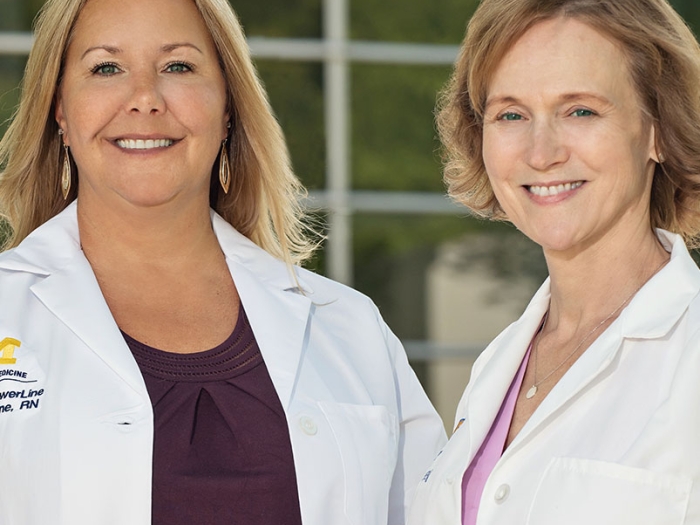
Questions about cancer?
Contact our Cancer AnswerLine™ at 800-865-1125. You'll talk to a nurse with years of experience in cancer care.
Locations
-
Classical Hematology Clinic | Rogel Cancer Center 1500 E Medical Center Dr
Floor B1 Reception A
Ann Arbor, MI 48109-5911Get Directions
Doctors

Erica Leigh Campagnaro, MD
Clinical Associate Professor
Hematology, Medical Oncology, Internal Medicine

Matthew James Pianko, MD
Clinical Associate Professor
Hematology, Medical Oncology, Internal Medicine
