Clostridioides Difficile (C. diff) Colitis
Clostridioides Difficile (C. diff) Colitis
What is Clostridioides difficile (C. diff) colitis?
Clostridioides difficile (also called C. diff) is a type of bacteria that can cause swelling and irritation of the large intestine. This can cause diarrhea, fever, and belly cramps.
Infection by C. diff is most common in people who are taking antibiotics or who took them in the past few weeks. It is also more likely in older people and people who are getting chemotherapy for cancer. Though the infection can be mild, it can become serious, especially for people who have a weak immune system.
The large intestine normally contains many good bacteria that keep it healthy and don’t cause disease. When you take an antibiotic to kill specific bacteria that are causing an illness, your antibiotic may also kill the good bacteria. This can allow C. diff bacteria to grow and release harmful toxins.
The inflammation of the large intestine, called colitis, is caused by these toxins. This is a serious infection that needs treatment. The toxins can also cause the colon to swell to many times its normal size. If that happens, it’s very serious and needs emergency treatment.
If you are still taking an antibiotic, your doctor may have you stop taking it because it may have led to the C. diff infection. Your doctor may then give you a different antibiotic that targets C. diff.
What causes Clostridioides difficile (C. diff) colitis?
The large intestine has many good bacteria that keep it healthy and do not cause disease. If you take antibiotics to kill bacteria that do cause disease, your medicine may also kill the good bacteria. This may allow Clostridioides difficile (C. diff) bacteria to grow in your large intestine. They can release harmful substances called toxins.
When the toxins are released, the colon becomes inflamed.
People who take medicines that reduce stomach acid, such as Nexium, Prevacid, or Prilosec, also have a greater risk of getting a C. diff infection. Your doctor can help you decide which medicines to keep or change.
Appointment Information
To make an appointment, please call 734-647-5899 or 888-229-7409.
What are the symptoms of Clostridioides difficile (C. diff) colitis?
Clostridioides difficile (C. diff) colitis may cause diarrhea, belly cramps, fever, or dehydration. You also may have an abnormal heartbeat, especially if you become dehydrated. Symptoms usually begin 4 to 10 days after you start taking antibiotics. But they might not start until a few weeks after you stop taking antibiotics.
How is Clostridioides difficile (C. diff) colitis diagnosed?
Your doctor may think you have this condition if you are taking, or you recently took, antibiotics. Your doctor may also think you have it if you have watery diarrhea, belly cramps, fever, or dehydration. A sample of your stool may be tested. You may also have a colonoscopy.
How is Clostridioides difficile (C. diff) colitis treated?
Your doctor may have you stop taking the antibiotic that caused Clostridioides difficile (C. diff) colitis. The doctor may then treat it with a different antibiotic. For severe diarrhea, you may be given fluids to prevent dehydration. If C. diff is severe or comes back a few times, a fecal transplant may be done.
Locations
-
Infectious Disease Clinic | Brighton Center for Specialty Care 7500 Challis Rd
Entrance 1, Level 2
Brighton, MI 48116-9416Get Directions -
Infectious Disease Clinic | Canton Health Center 1051 N Canton Center Rd
Floor 3 Reception D
Canton, MI 48187-5097Get Directions -
Infectious Disease Clinic | Taubman Center 1500 E Medical Center Dr
Floor 3 Reception D
Ann Arbor, MI 48109-5378Get Directions
Doctors
Sandro Kurt Cinti, MD
Clinical Professor
Infectious Diseases, Internal Medicine
Tejal Nikhil Gandhi, MD
Clinical Professor
Infectious Diseases, Internal Medicine
Kevin Sellery Gregg, MD
Clinical Professor
Infectious Diseases, Internal Medicine
Daniel Richard Kaul, MD
Clinical Professor
Infectious Diseases, Internal Medicine
Powel Harold Kazanjian, MD
Professor
Infectious Diseases, Internal Medicine

Kathleen Ann Linder, MD
Clinical Assistant Professor
Infectious Diseases, Internal Medicine
Preeti N Malani, MD
Clinical Professor
Infectious Diseases, Internal Medicine, Geriatric Medicine
David Michael Markovitz, MD
Professor
Infectious Diseases, Internal Medicine
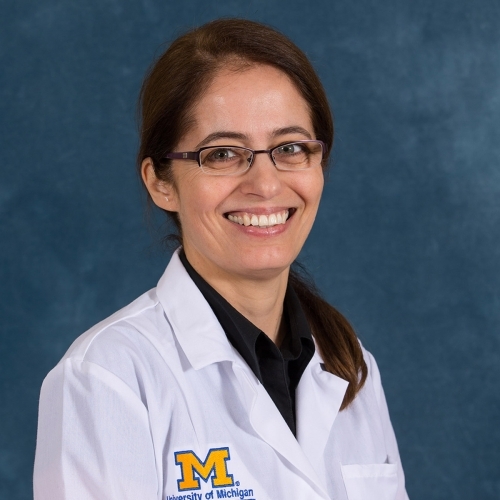
Marisa Haydee Miceli, MD
Clinical Professor
Infectious Diseases, Internal Medicine
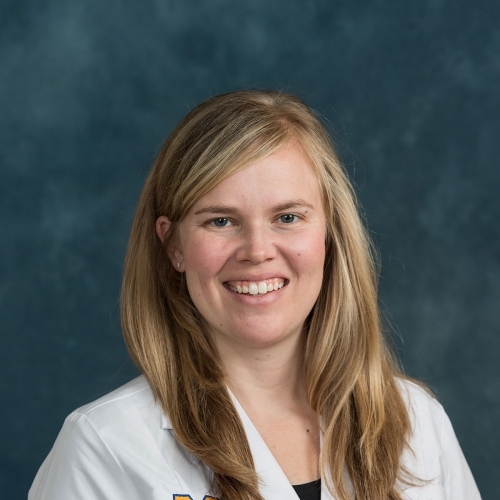
Lindsay Ann Petty, MD
Clinical Associate Professor
Infectious Diseases, Pediatrics, Internal Medicine



News & Stories
IBS treatment response predicted by gut microbiome in new study
Evolutionary insights into the development of the human intestine
Low FODMAP diet improves leaky gut in study
When to use an at-home colorectal cancer screening test instead of a colonoscopy

Can personalized care prevent overscreening for colorectal cancer in older adults?