Scleroderma
Scleroderma
What is scleroderma?
Scleroderma means “hard skin.” There are many human diseases associated with tightening and thickening of the skin so there are many sclerodermas.
The cause of scleroderma is not currently understood and there are no proven effective therapies for the underlying disease process. There have been many breakthroughs over the years in terms of the ability to treat specific internal organ complications and survival from scleroderma is constantly improving.
Scleroderma Program
The Scleroderma Program at U-M Health brings together expert caregivers, researchers, and educators to advance the treatment of scleroderma. Our team is dedicated to developing effective therapies, supporting patients, and driving discovery.
Types
Systemic Sclerosis
Systemic sclerosis (SSc, scleroderma) is the most serious form of the disease. This form of scleroderma can occur at any age but is most common in women of childbearing age. It occurs in around 30 persons per million population per year and there are an estimated 125,000 active cases in the United States and perhaps 2.5 million worldwide. It is the most fatal of all the rheumatologic diseases.
Systemic scleroderma is very unpredictable although most cases can be classified into one of four different general patterns of disease. The illness is classified based on the extent and severity of skin thickening which in turn is related to the risk profile of developing internal organ involvement. Disability and survival are mainly influenced by the presence of damage to the lungs, kidneys, heart and gastrointestinal systems.
All patients with scleroderma have certain shared features of the illness which include:
- Progressive scarring of blood vessels beginning in the fingers but with risk of extending to internal organs
- Scarring of tissues outside the blood vessels including skin thickening and lung involvement
- Varying levels of tissue inflammation and evidence of an overactive immune system
The illness is classified in large measure based on the extent and severity of skin thickening. This is usually done by a simple clinical examination technique called the Modified Rodnan Skin Score.
An individual with skin thickening restricted to the face, forearms, hands and fingers would be said to have systemic sclerosis with limited scleroderma.
Classification of Systemic Sclerosis
- Raynaud phenomenon for years, occasionally decades
- Skin involvement limited to hands, face, feet, and forearms (acral distribution)
- Dilated nailfold capillary loops, usually without capillary drop-out
- A significant (10 to 15 percent) late incidence of pulmonary hypertension, with or without skin calcification, gastrointestinal disease, telangiectasias (CREST syndrome), or interstitial lung disease
- Renal disease rarely occurs
- Anticentromere antibody (ACA) in 70 to 80 percent
- Raynaud phenomenon followed, within one year, by puffy or hidebound skin changes
- Truncal and acral skin involvement; tendon friction rubs
- Nailfold capillary dilation and capillary drop-out
- Early and significant incidence of renal, interstitial lung, diffuse gastrointestinal,and myocardial disease
- Anti-Scl-70 (30 percent) and anti-RNA polymerase-I, II, or III (12 to 15 percent)antibodies
- Presentation with pulmonary fibrosis or renal, cardiac, or gastrointestinal disease
- No skin involvement
- Raynaud phenomenon may be present
- Antinuclear antibodies may be present – anti-Scl-70, ACA, or anti-RNA polymerase-I, II or III
- Generally diffuse distribution of skin sclerosis and a history of exposure to an environmental agent suspected of causing scleroderma
- Features of systemic sclerosis which coexist with those of another autoimmune rheumatic disease such as systemic lupus erthematosus, rheumatoid arthritis,dermatomyositis, vasculitis, or Sjögren’s syndrome.
- Raynaud phenomenon
- Nailfold capillary changes and evidence of digital ischemia
- Specific circulating autoantibodies – anti-topoisomerase-l (Scl-70), anti-centromere(ACA), or anti-RNA polymerase-l, II, or III
Localized scleroderma
Localized scleroderma describes conditions in which the scleroderma disease process is restricted to involvement of the skin. As a rule, localized scleroderma does not cause internal organ involvement. This is most common in children and in the elderly, although it may occur at any age.
Appointment Information
Patients may schedule an appointment by calling 734-647-5900 or 888-229-3065.
You may also want to connect with a peer mentor via our peer mentor program:
Symptoms & Complications
Scleroderma is a chronic autoimmune disease that causes inflammation in the skin, leading to patches of tight, hard skin. Scleroderma can also have an effect on almost every organ system in the body, with symptoms and complications varying greatly from person to person. Common symptoms and complications include:
- Digital Ulcers
- Gastrointestinal Issues
- Lung Involvement
- Malnutrition
- Pulmonary Hypertension
- Raynaud Phenomenon
- Renal Involvement
- Sexuality issues
News & Stories

Single-cell RNA sequencing gives insight to dermatomyositis treatment
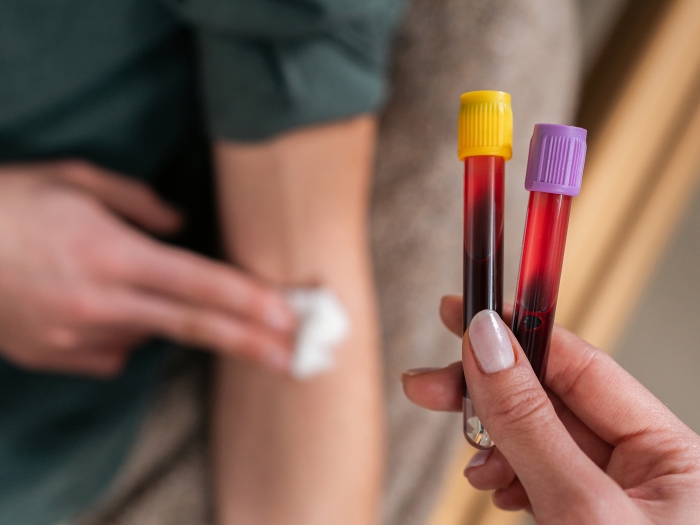
Using gene expression in blood to personalize care for APS

For scleroderma research, patients seen as essential co-creators

Radiation therapy for non-cancer diseases

Cracking the code on APS vasculopathy